Source three phase high speed electric motor for Industrial, Car, Power Tools
Compare 30 listings of three phase high speed electric motor with varying protection levels, starting modes, and certifications. Buyers can evaluate specifications for industrial, automotive, and household appliance applications directly from verified Chinese manufacturers.
Key considerations
Products List




Comprehensive Sourcing Guide
Strategic Sourcing Guide for Three-Phase High-Speed Electric Motors
The global market for industrial automation relies heavily on the reliability and efficiency of electric motors. For procurement professionals seeking a three-phase high-speed electric motor, the decision-making process extends beyond simple price comparison. It requires a rigorous analysis of technical specifications, certification compliance, and supply chain resilience. The following guide synthesizes observed market data and technical attributes to provide a disciplined framework for sourcing these critical components. Buyers must navigate a landscape where "high speed" is a specific operational characteristic, often paired with variable frequency starting modes and robust protection ratings to ensure longevity in demanding environments.
Technical Specifications and Operational Parameters
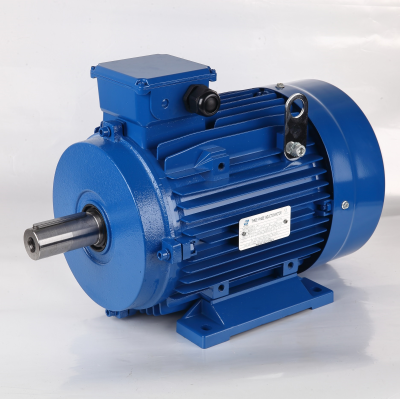
When evaluating a three-phase high-speed electric motor, the primary focus must be on the alignment between the motor's inherent design and the specific application requirements. Based on available product data, the Squirrel-Cage rotor structure is a dominant configuration observed in this category. This design is favored for its robustness and low maintenance needs, making it suitable for continuous duty operations. The Number of Stator is consistently identified as Three-Phase, which is the standard for industrial power distribution, offering balanced power delivery and efficient torque generation.
Speed is a critical differentiator. The market data indicates that these motors are engineered for High Speed operation, with synchronous speeds ranging from 3000rpm down to 600rpm. This wide range allows for customization based on the specific load requirements of the machinery. The Rated Frequency is typically listed as 50 Hz/60Hz or customizable, ensuring compatibility with global power grids. Similarly, the Rated Voltage often spans 220V-380V or can be customized to 380V, providing flexibility for various industrial power systems.
The Starting Mode is another vital technical specification. Buyers should verify whether the motor supports Variable Frequency Starting, Soft Starter, or Direct on-line Starting. Variable frequency starting is particularly relevant for high-speed applications as it allows for smooth acceleration, reducing mechanical stress on the drive train. The Operating Speed is further defined by the duty cycle, with S1 (Continuous Duty) being the standard mode of operation for these units. The Cooling Method is also a key factor; observations include IC411, which denotes a self-ventilated motor with an external fan, ensuring adequate heat dissipation during high-speed operation.
Compliance, Certification, and Safety Standards
In the industrial sector, compliance is not merely a formality but a prerequisite for market access and operational safety. The Certification landscape for three-phase motors is stringent. The most frequently observed certifications in the supply data are CCC (China Compulsory Certification) and ISO standards. The presence of these marks indicates that the manufacturer adheres to specific national and international quality management protocols. Buyers must explicitly verify that the CCC certification is valid for the specific model and that the ISO certification covers the relevant quality management systems.
Safety is paramount, especially when motors are deployed in hazardous environments. The Casing Protection types observed include Explosion-Proof Type and Protection Type, alongside Open Type variants. The Explosion-Proof designation is critical for applications in chemical, petrochemical, or mining industries where flammable gases or dusts may be present. The Protection Level is often rated at IP55, IP56, or IP65, indicating a high degree of protection against dust and water jets. For less demanding environments, an IP23 rating might be observed, but for high-speed industrial applications, the higher IP ratings are generally preferred to prevent ingress of contaminants that could cause bearing failure.
The Species of the motor is also categorized, with Explosion-Proof Three-Phase being a specific classification. This confirms that the motor is designed to contain any internal explosion and prevent it from igniting the surrounding atmosphere. Buyers should ensure that the Prod Standard is clearly defined, whether it is Customized or adheres to specific industry standards like YBX4 or YE3 series models, which are often associated with high-efficiency and explosion-proof designs.
Cost Drivers and Pricing Dynamics
Understanding the cost structure of three-phase high-speed electric motors is essential for budgeting and negotiation. The observed Price Range in the market is vast, spanning from $6.9 to $41,118 USD. This extreme variance is not indicative of a single product type but rather reflects differences in power rating, material composition, certification levels, and customization depth. A motor priced at the lower end of the spectrum is likely a standard, off-the-shelf unit with minimal customization, while those at the higher end may feature specialized materials, custom engineering, or high-efficiency ratings.
Material composition is a significant cost driver. The supply data mentions Au Al (Gold Aluminum) as a material option, though this is less common than standard copper windings. The use of high-grade aluminum or copper in the stator windings directly impacts the motor's efficiency and cost. Customization is another major factor. The Customization attribute is listed as Available, and Logo Customization is Yes, indicating that branding and specific design tweaks are possible. These customizations, along with OEM acceptance, add value but also increase the unit price.
The MOQ (Minimum Order Quantity) varies significantly, ranging from 1 PC to 1000 units. This flexibility allows small buyers to procure single units for prototyping or testing, while large industrial buyers can leverage economies of scale by ordering in bulk. The Production Capability of suppliers, observed at 1,300,000 PC/Year, suggests that high-volume orders can be fulfilled without significant lead time delays, provided the specifications are standard. However, highly customized orders may require longer lead times and higher per-unit costs.
Typical Applications and Industry Fit
The versatility of three-phase high-speed electric motors is evident in their diverse Application categories. These motors are deployed in Industrial settings, Car manufacturing, Household Appliances, and Power Tools. The Universal application tag suggests that these motors are adaptable to a wide range of machinery. In the Industrial sector, they are used for driving pumps, fans, compressors, and conveyors where high rotational speed is required.
For Car applications, the motors must meet strict vibration and thermal standards, often requiring Explosion-Proof or Open Type casings depending on the location within the vehicle. In Household Appliances, the focus shifts to noise reduction and compact design, though the High Speed attribute remains relevant for appliances like washing machines and vacuum cleaners. Power Tools utilize these motors for their high torque-to-weight ratio, enabling portable equipment to deliver significant power.
The Function of these motors is broadly categorized as Control and Driving, highlighting their role in both automated control systems and direct mechanical drive applications. The Synchronous Speed options, ranging from 3000rpm to 600rpm, allow engineers to select the exact speed required for the specific mechanical load, optimizing energy efficiency and performance.
Supplier Evaluation and Verification
Selecting the right supplier is as critical as selecting the right motor. The Prod Origin is predominantly China, with specific mentions of Hebei Xiangli Motor Manufacturing Co., Ltd. While this provides a geographical context, buyers should not rely solely on the location. Instead, they must evaluate the supplier's Production Capability, which is observed at 1,300,000 PC/Year, indicating a mature manufacturing base.
Buyers should verify the Certification status directly with the supplier. The presence of CCC and ISO marks in the product data is a positive indicator, but independent verification is necessary to ensure these certifications are current and applicable to the specific order. The Standard of the product, whether Customized or See details, must be clearly defined in the contract. Ambiguity in standards can lead to quality discrepancies.
The Package details are also important for logistics. Observations include Wooden Box, Wooden Case, Carton, and Hard Wooden packaging. The Szie (Size) of the package is noted as 500.00cm * 500.00cm * 500.00cm in some contexts, which suggests large-scale industrial packaging. Buyers should confirm that the packaging is sufficient to protect the motor during transit, especially for high-value, high-speed units. The HS Code of 85015100 is a standard classification for electric motors, which aids in customs clearance and duty calculation.
Quality Control and Long-Term Procurement
Quality control in the procurement of three-phase motors involves rigorous testing and inspection protocols. The Protection Level and Casing Protection are key quality indicators. A motor rated IP55 or higher must undergo rigorous ingress protection testing to ensure it meets the specified dust and water resistance. The Starting Mode must also be tested to ensure that Variable Frequency Starting or Soft Starter functions operate smoothly without excessive current surges.
Long-term procurement considerations include the availability of spare parts and the supplier's ability to support Logo Customization and OEM requests over time. The Production Capability of 1,300,000 PC/Year suggests that the supplier has the capacity to maintain a steady supply, but buyers should establish a clear agreement on lead times for custom orders. The Operating Speed and Synchronous Speed must remain stable over the motor's lifespan, which depends on the quality of the bearings and the cooling system.
Buyers should also consider the Rated Voltage and Rated Frequency stability. A motor designed for 50Hz/60Hz operation must perform reliably across both frequencies if it is to be used in different regions. The Cooling Method of IC411 should be inspected to ensure that the cooling fan is robust and that the air flow is unobstructed. Regular maintenance schedules should be established to monitor the motor's performance, particularly the Number of Poles and the Rotor Structure, to prevent premature failure.
Comparison of Key Motor Attributes
To assist in the decision-making process, the following table summarizes the key attributes observed in the market for three-phase high-speed electric motors. This comparison highlights the variability in specifications and helps buyers identify the features that are most critical for their specific application.
| Attribute Category | Observed Options | Critical Considerations for Buyers |
|---|---|---|
| Rotor Structure | Squirrel-Cage | Standard for robustness; verify bearing quality. |
| Number of Stator | Three-Phase | Essential for industrial power compatibility. |
| Casing Protection | Explosion-Proof, Open, Protection Type | Match to environment (hazardous vs. general). |
| Protection Level | IP55, IP56, IP65, IP23 | Higher IP for harsh environments; IP55+ recommended. |
| Starting Mode | Variable Frequency, Soft Starter, Direct on-line | Variable frequency preferred for high-speed control. |
| Rated Voltage | 220V-380V, 380V Customized | Verify grid compatibility; 380V is common industrial. |
| Rated Frequency | 50Hz/60Hz, Customized | Ensure match with local power grid standards. |
| Operating Speed | High Speed, Constant Speed | Verify synchronous speed (3000-600rpm) matches load. |
| Certification | CCC, ISO | Mandatory for compliance; verify validity. |
| Customization | Available, Logo, OEM | Confirm lead time and cost implications. |
| Material | Au Al, Standard Copper/Aluminum | Verify winding material for efficiency and cost. |
| MOQ | 1 PC - 1000 Units | Negotiate based on volume; 1 PC allows testing. |
| Origin | China, Hebei Xiangli | Verify factory audits and quality control processes. |
In conclusion, sourcing a three-phase high-speed electric motor requires a balanced approach that weighs technical performance against cost and compliance. By focusing on the Squirrel-Cage design, verifying CCC and ISO certifications, and ensuring the Protection Level matches the application environment, buyers can secure reliable equipment. The wide range of Starting Modes and Synchronous Speeds offers flexibility, but the final selection must be grounded in a thorough evaluation of the supplier's Production Capability and Quality Control measures. This disciplined approach ensures that the procured motors will deliver consistent performance and longevity in the demanding industrial landscape.
FAQs
What certifications do three phase high speed electric motors typically have?
These motors typically hold CCC and ISO certifications. Buyers should verify that the CCC mark is valid for the specific model and that the ISO certification covers relevant quality management systems before placing an order.
Which starting modes are available for these high-speed motors?
Available starting modes include Variable Frequency Starting, Soft Starter, and Direct on-line Starting. Variable frequency starting is recommended for high-speed applications to ensure smooth acceleration and reduce mechanical stress on the drive train.
Can I customize the logo and design of these electric motors?
Yes, logo customization and OEM design acceptance are available. Buyers can request specific branding and design tweaks, though these customizations may increase the unit price and require longer lead times compared to standard units.
What is the minimum order quantity for purchasing these motors?
The minimum order quantity ranges from 1 PC to 1000 units depending on the supplier. Small buyers can procure single units for prototyping, while large industrial buyers can leverage economies of scale by ordering in bulk.
How are these motors packaged for shipping and protection?
Motors are packaged in Wooden Boxes, Wooden Cases, Cartons, or Hard Wooden containers. The packaging must be sufficient to protect the motor during transit, especially for high-value units, with some large-scale industrial packaging noted.
What is the production capacity of suppliers for these motors?
Suppliers have a production capability of up to 1,300,000 pieces per year. This high capacity suggests that high-volume orders can be fulfilled without significant delays, provided the specifications remain standard and do not require extensive custom engineering.